Installation controls from start to finish
We take care of the part that gets most complicated on any project: making sure all the equipment talks to each other and the building works as designed.
- A control-focused energy efficiency company in Extremadura
- Open BMS integration, with no vendor lock-in
- Building management: what it is, what it includes and how to procure it
- Remote monitoring and management of installations in Cáceres, Badajoz and across Extremadura
- Industrial automation in Cáceres and across Extremadura
- Electrical panels and automation in Cáceres and across Extremadura
- BACS requirements for buildings: what the regulations require and how to comply
- Remote monitoring of pumping stations, wells and wastewater treatment plants in Extremadura
- BMS and OT cybersecurity: protecting the control system of your building or plant
- Networks, Wi-Fi, CCTV and fibre optics for buildings and industry
- Services for engineering firms and consultants: controls and BMS
- Building services control for local councils and public bodies
Centralised building management
We control and supervise heating and cooling generation, distribution and terminal units from a single platform, accessible from a browser or mobile phone.
- Chillers, boilers, heat pumps and air-source heat pumps
- Air handling units and heat recovery units: temperature, humidity, CO₂ and pressure
- Fan coil units, underfloor heating and zone control
- Lighting, energy meters and technical alarms
- Historical data, trends and alerts by email or mobile
- Niagara (Honeywell), EcoStruxure Building Operation (Schneider Electric) and Siemens Desigo (ABT Site) platforms
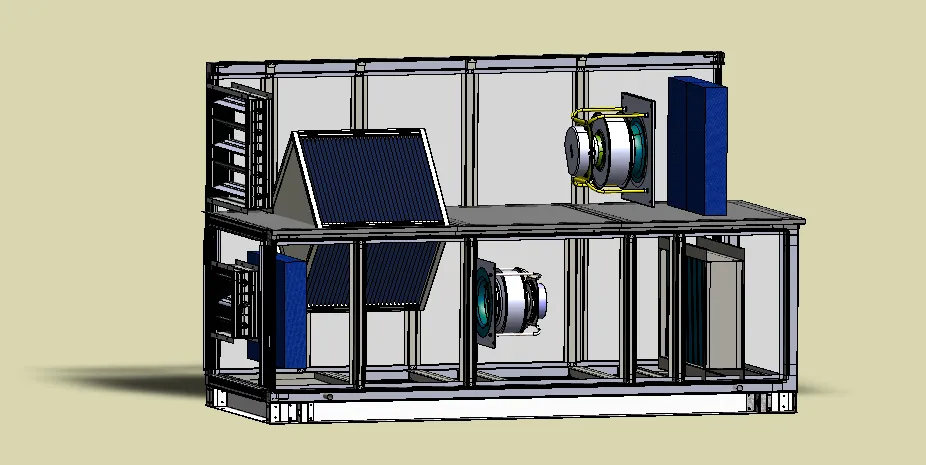
We help you define the controls before they become a problem
Controls are usually the last chapter of the design and the first to cause problems on site. We advise engineering firms, architects and building owners so the controls are properly defined from the outset, with no ties to any manufacturer.
For engineering firms and architects
- Control system architecture and protocols
- Points list (inputs and outputs) per item of equipment
- Schematic diagrams and sequences of operation
- Controls section for the bill of quantities and quote
- Technical specification with open requirements
- BACS efficiency class under UNE-EN ISO 52120
For building owners
- Technical review and comparison of bids
- Coordination with HVAC and electrical contractors
- Supervision of the controls works
- Verification of point-to-point testing and commissioning
- Review of handover documentation and training
For those who already have a system
- Audit of the existing control system
- Phased migration plan and quote
- Optimisation of sequences and setpoints
- Cybersecurity review of remote access
- Definition of maintenance contracts
Your control system can be partly paid for by the savings it generates
Energy Savings Certificates (CAE, the Spanish scheme) turn the energy your building no longer uses into money. Upgrading the building automation and control system is one of the recognised measures, and we take care of the entire process.
How it works
Assessment
We assess the current efficiency class of your control system under UNE-EN ISO 52120-1.
Design and installation
We design and install the improvements needed to reach at least class B.
Supporting evidence
As the installation contractor, we sign the BAC class declaration and prepare the technical documentation required by the TER050 measure sheet.
Processing and payment
Together with our partner, a CAE delegated entity, the savings are verified, the certificates are issued and you get paid.
Is my building eligible?
- Tertiary sector buildings: offices, hotels, educational, healthcare, retail and public buildings
- Specific TER050 measure sheet from the official MITECO catalogue: building automation and control systems (BACS) in tertiary buildings
- The system must reach at least class B under UNE-EN ISO 52120-1
- The installation contractor signs the declaration of the class achieved
The amount depends on the certified savings and the market price of CAE at the time. Before we start, we give you an estimate based on your building's data.
We rescue obsolete control systems
If spare parts are no longer available for your system, the software won't run on modern computers or only one person ever knew how to operate it, we migrate it to an open platform without redoing the installation.
| Current system | What we do | What is retained |
|---|---|---|
| Honeywell CARE / Eagle / Excel 5000 | Migration to Niagara with Honeywell controllers, retaining BACnet integration | Sensors, actuators, field wiring |
| Siemens Desigo | Integration into a common supervisory system or programming with ABT Site, depending on the condition of the system | Controllers, panels and wiring, depending on condition |
| Other manufacturers | Controller replacement and unified web-based supervision | Panels and wiring, depending on condition |
| KNX / building automation | Conversion or integration with HVAC controllers and a common platform | Existing devices and bus |
| Unsupervised equipment | BACnet or Modbus integration of chillers, boilers and meters | All equipment |
CARE migration with no lock-in Honeywell CARE to Niagara migration
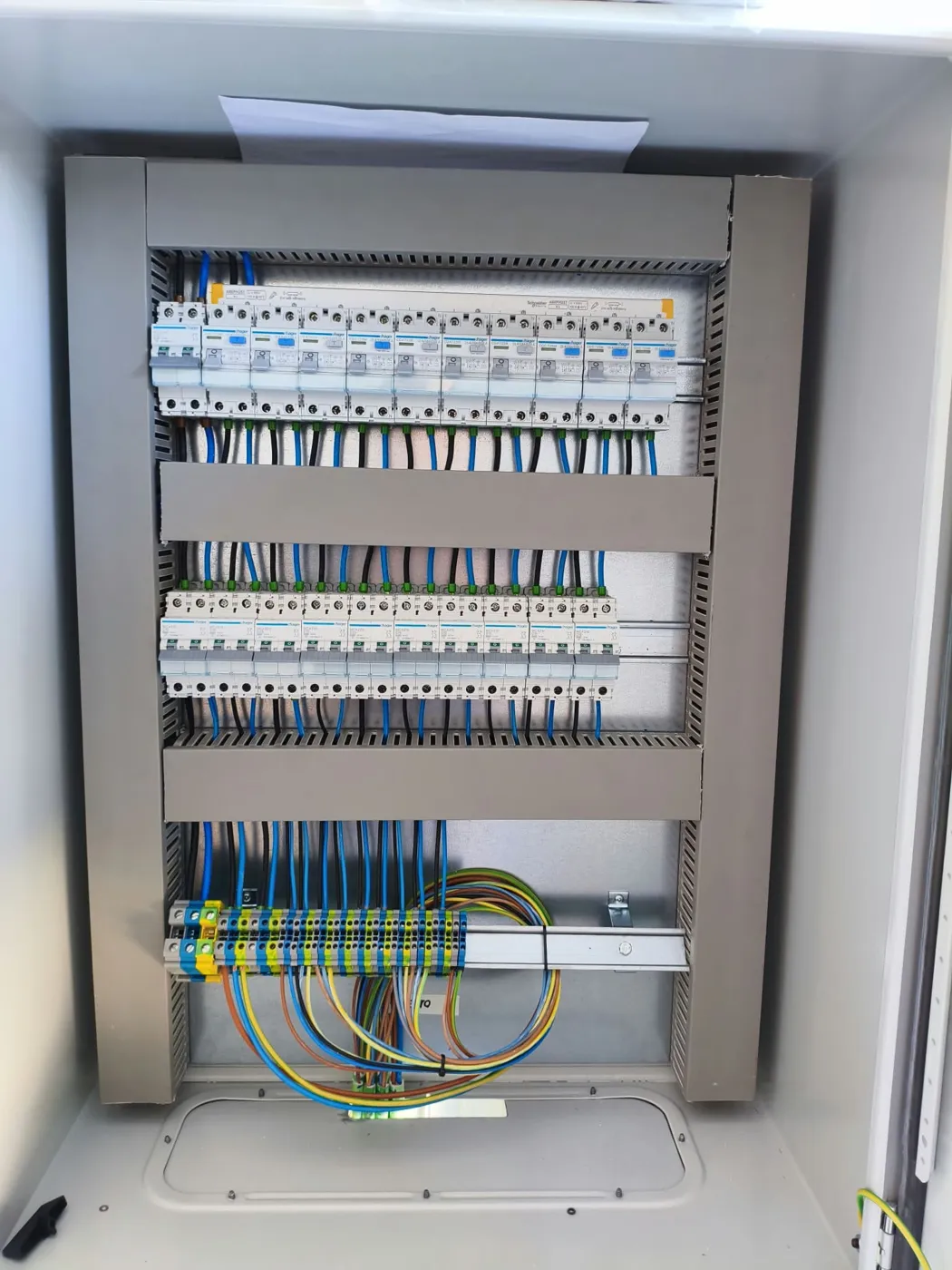
Workshop-built control and switching panels
We design the schematics, build and wire every panel, and test it before it is sent to site. That makes commissioning shorter and free of surprises.
- HVAC control panels and pump control panels
- Protection and distribution boards to REBT
- Custom electrical schematics and terminal schedules
- Labelling of cables, terminals and equipment
Savings you can measure
Most HVAC savings don't come from replacing equipment, but from making it run properly: correct schedules, setpoints and sequences.
Control optimisation
Fine-tuning of schedules, setpoints, flow temperature curves, free cooling and optimum start.
Power quality
Analysis with a power quality analyser: harmonics, power factor, imbalances and consumption per circuit.
Trend reports
Regular reports with charts of temperatures, run hours and alarms, so you can make data-driven decisions.
Antennas, coaxial and RF
We measure return loss, VSWR and distance to fault in cables and antennas, and analyse the radio spectrum.
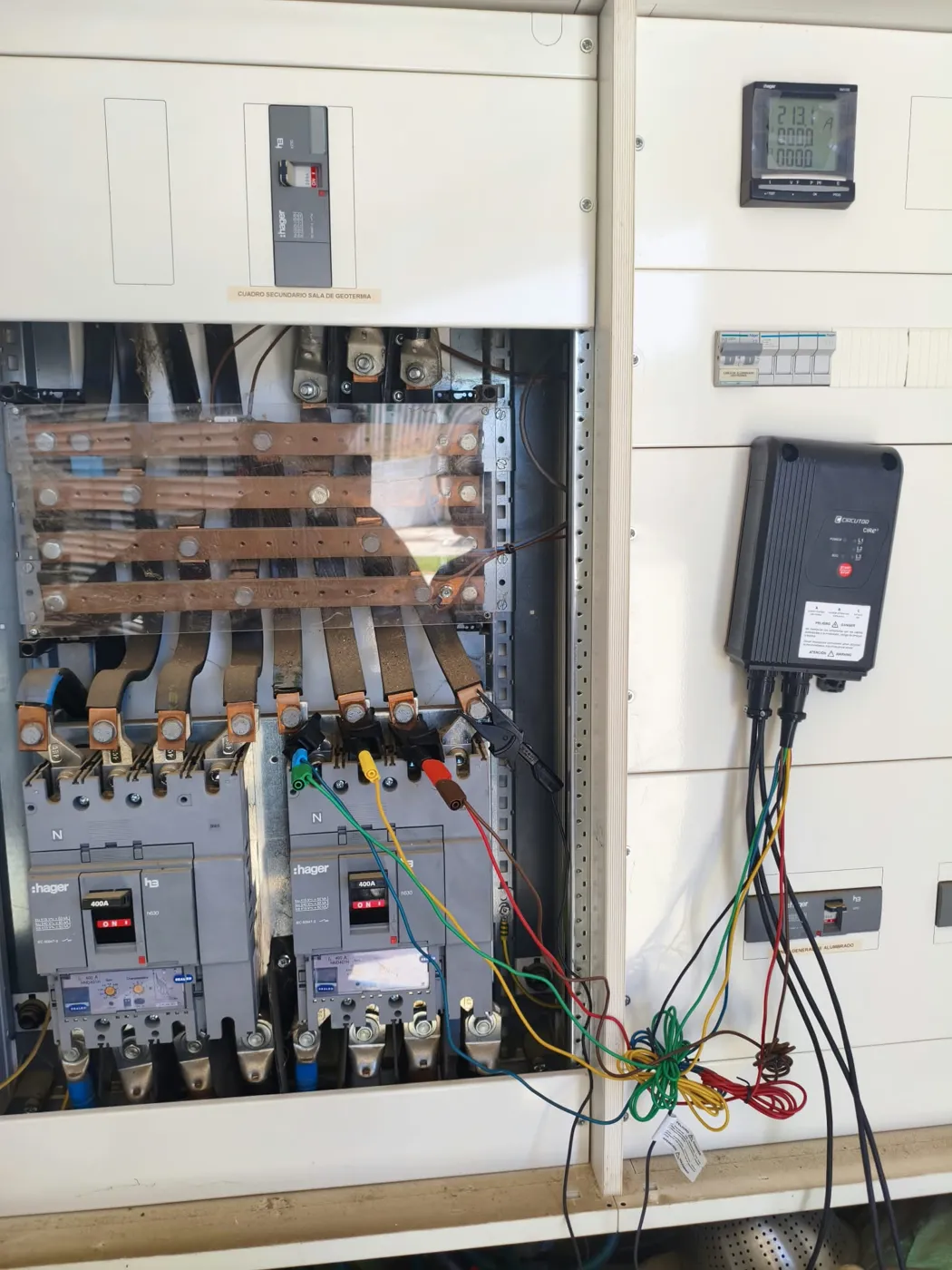
First we measure, then we propose
We leave a power quality analyser connected to the panel for several days to log voltages, currents, harmonics and power factor. With that data we detect overloads, phase imbalances and out-of-hours consumption, and size the improvements using real figures.
How much could your building save? My HVAC uses too much energy
Your energy, measured, analysed and explained every month
We manage your building's energy for a fee: we measure, analyse and tell you what to do. All you have to do is read the report and decide.
Monitoring
Electricity, gas, water and thermal energy meters integrated into the supervisory system, with data by building, floor or item of equipment.
Automated reports
Regular reports with consumption, comparisons, deviations and out-of-hours consumption, sent by email without you having to ask.
ISO 50001 support
Baseline, energy performance indicators (EnPIs) and tracking data to implement or maintain your energy management system.
Carbon footprint
Calculation of the emissions associated with the building's energy use and tracking of their reduction year on year.
Frameworks we work with
- ISO 50001 · energy management
- UNE-EN ISO 52120-1 · BACS class
- CAE · TER050 measure sheet
- EU Energy Performance of Buildings Directive
- RITE
The same data can be used to substantiate savings for Energy Savings Certificates, for sustainability reports and to decide where to invest. See CAE funding.
Solar self-consumption, integrated with the rest of the building
We design, install and register self-consumption systems for homes, residential communities, public buildings and industrial buildings. And we integrate them into the supervisory system so you can see generation and consumption on the same screen.
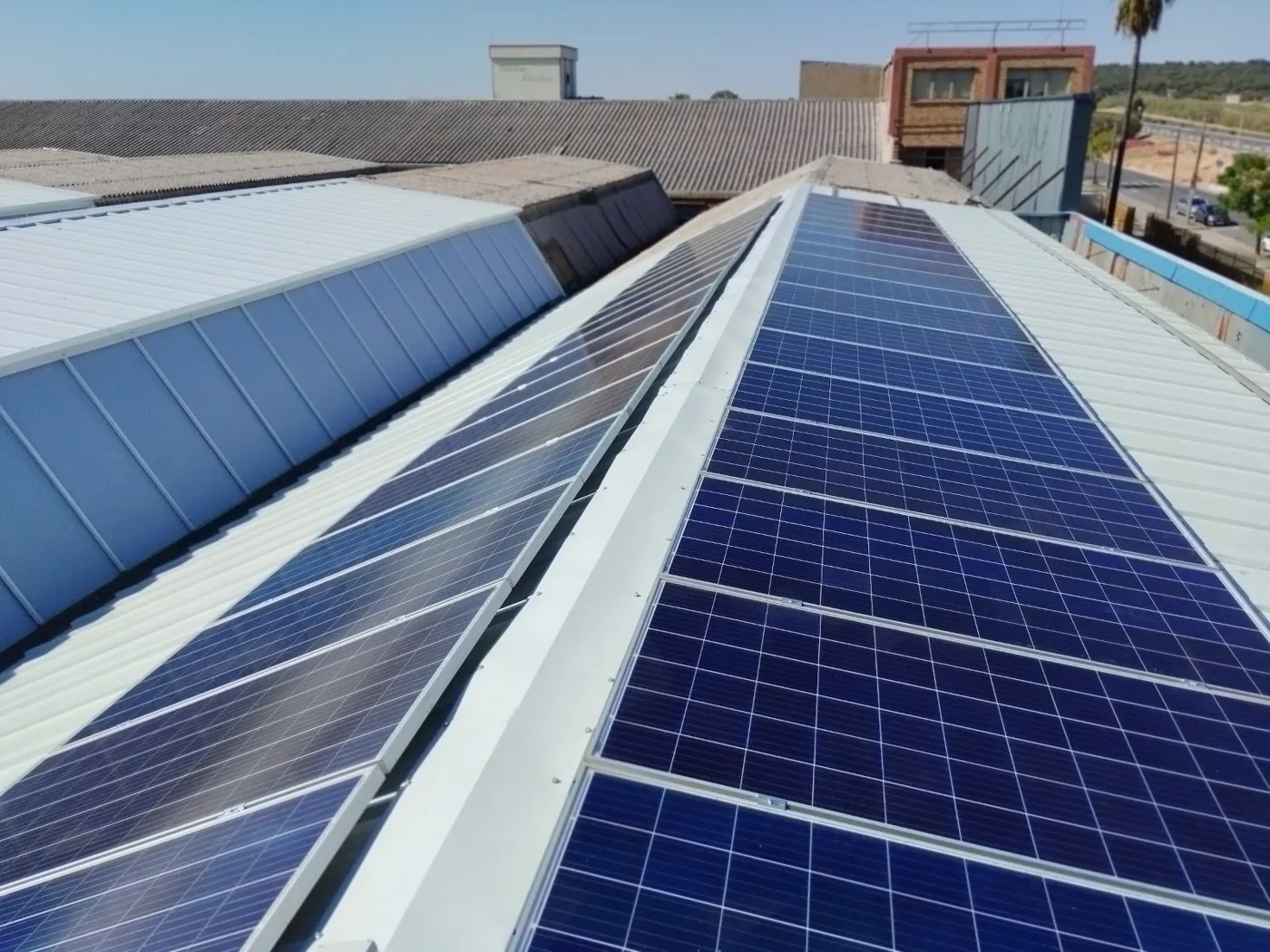
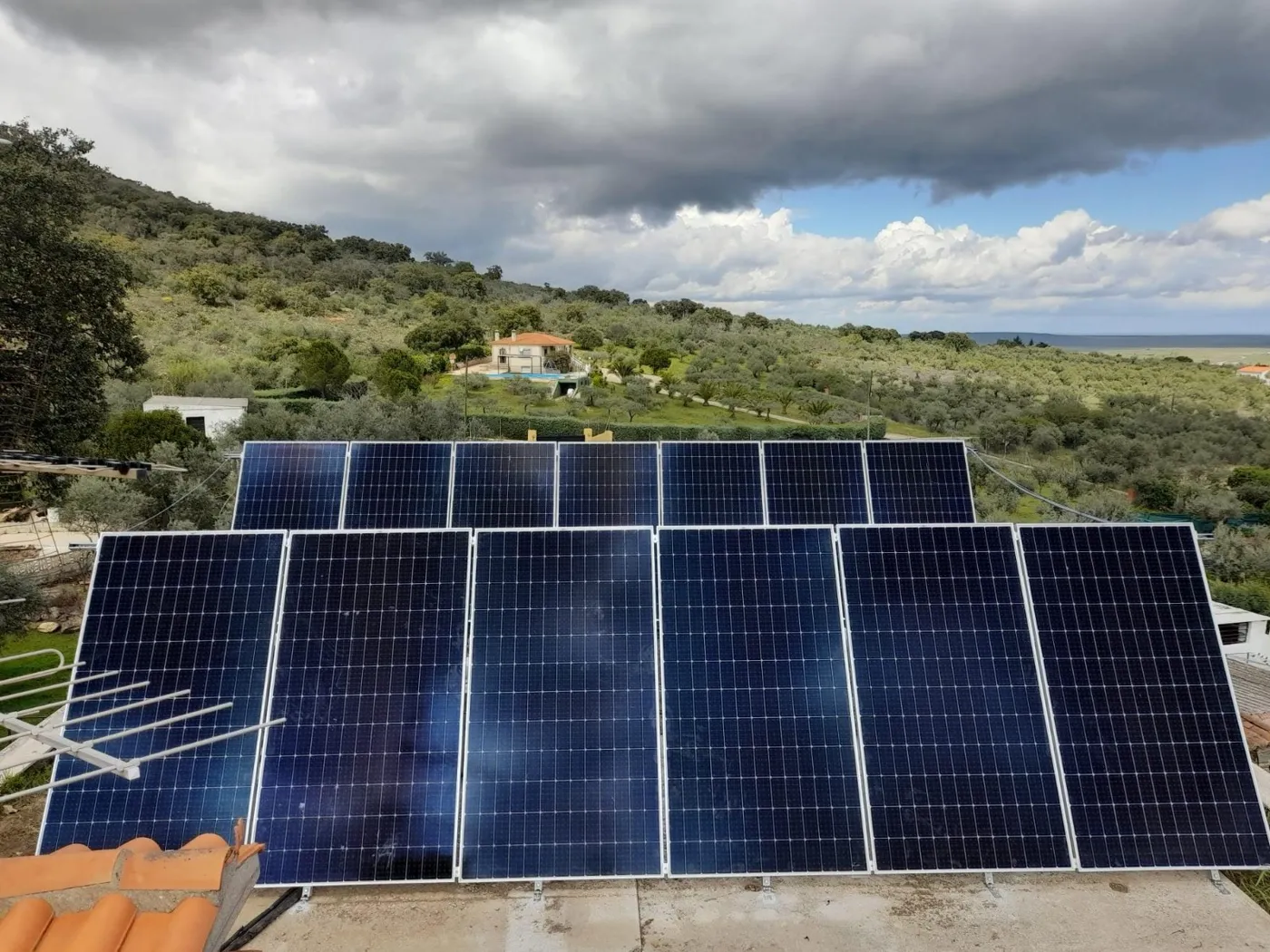
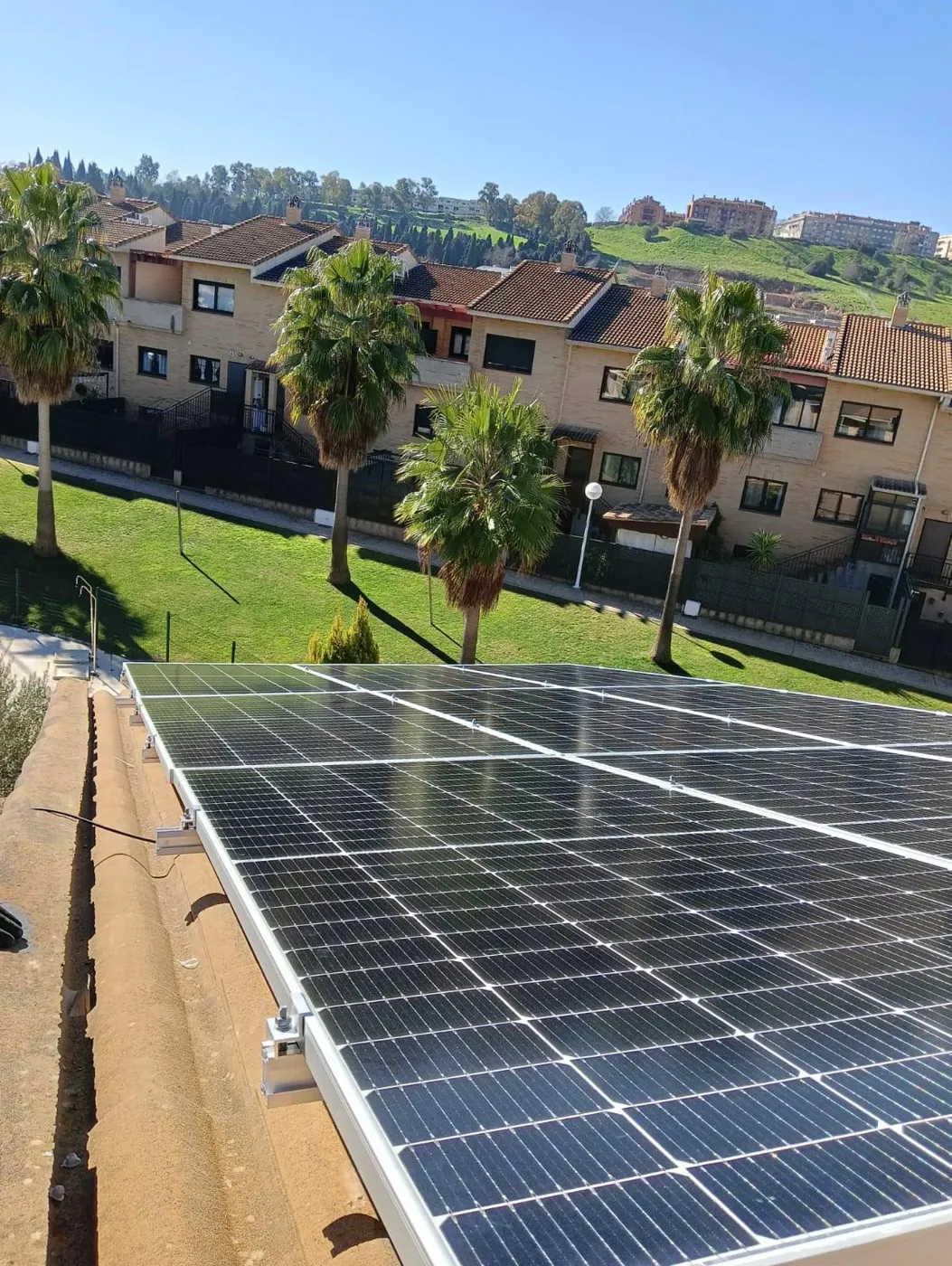
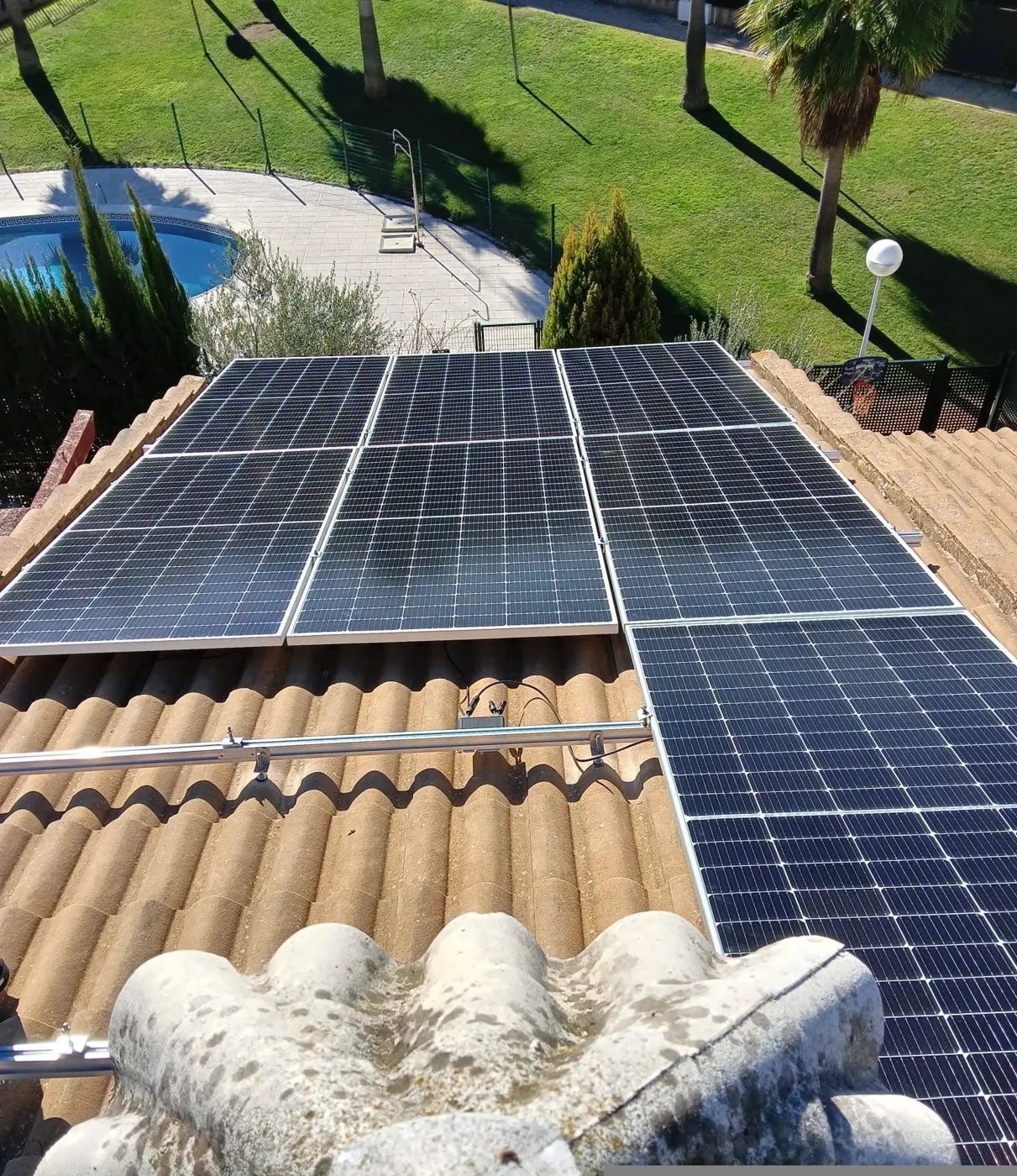
- Consumption study and system sizing
- Installation on tiled, flat or metal sheet roofs
- Registration and surplus energy compensation
- Energy communities and shared self-consumption
Networks, fibre optics and video surveillance
We install and certify the infrastructure that connects the building: from the rack and fibre to the cameras and people counters, integrated with the other systems.
Networks and racks
Structured cabling, racks, switches and telecoms networks for buildings and industry.
Fibre optics
Fusion splicing, precision cleaving and optical power measurement to certify every link.
IP video surveillance
IP cameras, recording and remote viewing, integrated into the building network.
People counters
Occupancy counting by zone to manage occupancy and match HVAC to actual demand.
Drone inspection: we see what can't be seen from the ground
We have our own drone to inspect high-voltage lines and any hard-to-reach installation. Faster, safer and with no service interruption.
- AESA-certified pilot
- Open category A1/A3
- A2 subcategory
High-voltage lines
Inspection of towers, insulators, conductors and fittings, with close-up images to plan maintenance.
Roofs and solar PV
Condition of modules, structures, roofs and rooftop equipment, without scaffolding or lifelines.
Whatever you need
Chimneys, façades, tanks or any elevated point. Tell us what you need to see and we'll inspect it.
Your installation monitored, even when nobody is watching
Through a secure remote connection we receive alarms, check operation and correct settings without travelling to site. And we analyse historical data to detect faults before they happen.
- Alarm reception and management
- Predictive maintenance: trends in temperatures, pressures, consumption and run hours
- Detection of valves that don't close, dirty filters, out-of-calibration sensors and short cycling
- Monthly operation and energy report
- Scheduled preventive visits and backups of the programming
Ask about a maintenance contract More about remote monitoring
Following the principles of the ISA/IEC 62443 series, remote access is via encrypted connections, with individual user accounts and a segregated control network. We never leave the control system exposed to the internet.
For maintenance staff
System architecture, programming, alarm management and fault diagnosis, on your own installation.
For users
Using the supervisory system, changing schedules and setpoints, reading trends and reports. No jargon.
Your control system, checked every day by automated rules
Every building has faults nobody sees: leaking valves, equipment running at night, drifting sensors. Things keep working, but they waste energy and wear out the plant. Our service detects them automatically and tells you which to fix first.
How it works
Onboarding
We inventory the equipment and connect securely. Our installations are already tagged with the open Project Haystack standard, so the rules apply from day one; if the system was installed by another integrator, we tag it.
Daily analysis
The rules run through the historical data of air handling units, chillers, boilers and terminal units.
Technical review
An ACIPro technician validates every alert before sending it to you, so you only receive the ones that matter.
Report and correction
Every month, faults prioritised by their impact on energy and comfort. We fix them remotely or during the preventive visit.
What it detects
- Leaking valves and heating and cooling coils open at the same time
- Equipment running out of hours or on public holidays
- Drifting sensors and dirty filters
- Short cycling of compressors and boilers
- Points left in manual override and setpoints that are never reached
- Missed free cooling opportunities
Studies by the Berkeley Lab (USA) find that, on any given day, around 40% of air handling units have an undetected fault. The measured savings also feed into your energy management and help substantiate Energy Savings Certificates.
Do you have a control system that nobody knows how to maintain?
We review your installation and tell you what can be reused, what should be replaced and how much you could save.